Helping Little Minds Grow School PNG
When you are designing materials for educators, parents, or children’s products, the visual element often carries more weight than the text itself. A well-chosen graphic can instantly communicate warmth, learning, and creativity. This is where a Helping Little Minds Grow School PNG becomes an invaluable asset. It is not merely a picture; it is a thematic anchor that ties together classroom decorations, merchandise, and marketing campaigns with a cohesive, cheerful aesthetic.
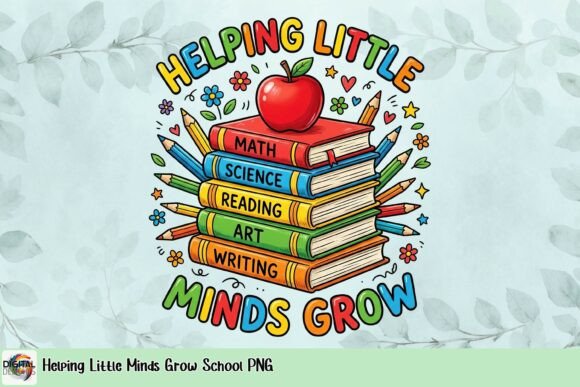
The specific design in question features a vibrant stack of books topped with a classic red apple, surrounded by pencils, flowers, and stars. The phrase "HELPING LITTLE MINDS GROW" is rendered in bold, playful letters. While this image sounds perfect on paper, many creators make critical errors when integrating such assets into their projects. Understanding the nuances of file formats, licensing, and application context ensures that your final product looks professional rather than amateurish.
Understanding the Value of Transparent Backgrounds
One of the primary reasons designers seek out PNG files over JPEGs is the support for transparency. When you download a high-quality PNG with a transparent background, you gain the flexibility to place the graphic onto any color shirt, mug, or poster without dealing with unsightly white boxes or awkward cropping edges. However, a common mistake occurs when users attempt to resize these images improperly.
While PNGs allow for easy resizing without losing quality up to a certain point, downscaling too aggressively can result in pixelation or blurry edges, especially around intricate details like the stems of the flowers or the texture of the apple. Always start with the highest resolution file available. If you need the image larger than its original dimensions, do not stretch it. Instead, look for a higher-resolution source or vector version if one exists. Resizing should always be done within your design software using bicubic interpolation or similar high-quality algorithms to maintain crispness.
Context Matters: Where Does This Design Fit?
The imagery described—books, apples, pencils—is deeply rooted in traditional educational symbolism. It evokes nostalgia and trust. However, misapplying this theme can lead to a disconnect with your target audience. For instance, using this specific "Helping Little Minds Grow" design for a high school calculus textbook cover might feel incongruous. The playful font and child-centric icons suggest early childhood education, kindergarten, or elementary school levels.
Educators and small business owners often overlook this nuance. They assume that because the word "school" is present, the image is universally applicable. To avoid this pitfall, carefully evaluate your brand voice and customer demographic. If you are targeting university students or adult learners, this graphic may undermine the perceived seriousness of your material. Conversely, for daycare centers, preschool teachers, or parents buying back-to-school supplies, this design hits the right emotional notes perfectly.
Licensing and Commercial Use Misconceptions
Perhaps the most significant risk when downloading digital assets is ignoring the licensing terms. Many users assume that because an image is available online, it is free for commercial use. This is rarely true. Before you print your t-shirts, mugs, or posters, you must verify the license associated with the Helping Little Minds Grow School PNG.
- Personal Use Only: You can use the image for your own classroom bulletin board or personal blog, but you cannot sell products featuring it.
- Commercial License: This allows you to create products for sale, such as Etsy listings or printed merchandise. Ensure the license covers the volume of sales you anticipate.
- Attribution Requirements: Some licenses require you to credit the creator. Failing to do so can lead to legal issues and damage your reputation.
Failing to check these details can result in costly cease-and-desist orders or forced removal of your products from marketplaces. Always read the fine print. If the license is unclear, contact the creator directly. Transparency builds trust with both legal standards and your customers.
Design Integration and Color Harmony
A vibrant design with red apples, green leaves, and colorful stars demands careful integration. A frequent error is placing the graphic on a background that clashes with its color palette. For example, putting a bright red apple design on a dark red background causes the main subject to disappear. Similarly, placing it on a busy, patterned background can make the text unreadable.
To ensure your project looks polished, consider the following best practices:
- Contrast is Key: Use solid, neutral backgrounds like white, cream, light gray, or soft pastels to let the vibrant colors of the PNG pop.
- Whitespace Management: Do not crowd the design. Give the "HELPING LITTLE MINDS GROW" text breathing room. If you are adding additional text, such as a price or a slogan, ensure it does not overlap with the graphics.
- Color Matching: If you are printing on colored apparel, choose garment colors that complement the apple red and leaf green. Navy blue, heather gray, and soft yellow are excellent choices that enhance the educational theme without overwhelming it.
Versatility Across Mediums
The beauty of this PNG lies in its versatility. It can be scaled down for social media avatars or blown up for large-format banners. However, the output medium dictates the required resolution. For web use (websites, Instagram, Facebook), a file size between 72 DPI and 150 DPI is sufficient. For physical printing, you will need a much higher resolution, typically 300 DPI, to ensure the text remains sharp and the colors do not bleed.
If you plan to use the image on a tote bag or a ceramic mug, remember that the curve of the object affects how the image appears. Test your design on a mockup before committing to production. This step saves money and prevents disappointment when the final product looks distorted compared to your screen preview.
Evaluating Quality Before Purchase
Not all PNGs labeled as "high quality" are created equal. When evaluating a Helping Little Minds Grow School PNG, look closely at the edges of the elements. Are they smooth, or do they have jagged, aliased lines? Check the transparency. Zoom in to see if there are faint halos or white pixels around the transparent areas. These artifacts become visible when placed on colored backgrounds and ruin the professional look of your product.
Additionally, assess the font clarity. In complex designs, text can sometimes suffer from compression artifacts. If the letters in "HELPING LITTLE MINDS GROW" appear fuzzy or broken, the file may be too heavily compressed. Seek out sources that offer lossless PNGs or vector formats like SVG or AI, which provide infinite scalability without quality loss.
Final Thoughts on Effective Usage
Incorporating a Helping Little Minds Grow School PNG into your projects is a strategic move for anyone in the education or childcare sector. By avoiding common pitfalls related to licensing, resolution, and design integration, you can create materials that are not only visually appealing but also legally sound and professionally executed. Take the time to understand the asset, respect the creator’s rights, and apply it with thoughtful consideration of your audience. The result will be a collection of products and materials that truly resonate with teachers, parents, and young learners alike.